- Men's Clothing Store in Murrieta, California
- (951) 600-3997
- [email protected]
Complete Groom Attire Planning Guide for 2026

Tuxedo Rentals in Temecula: Fit, Style, Timing
September 24, 2026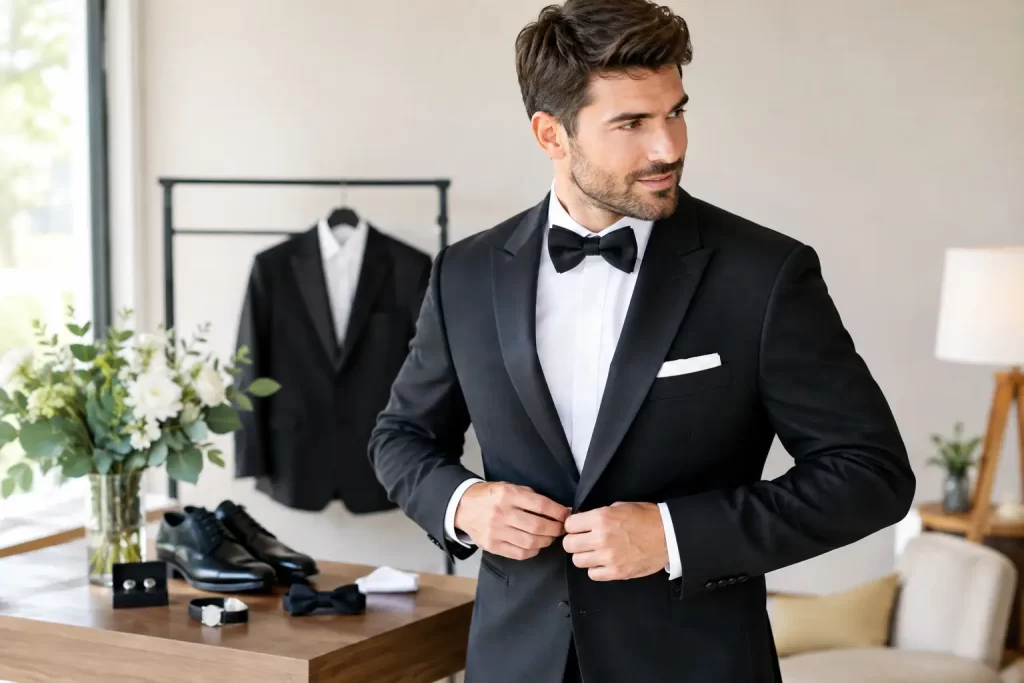
The wedding photos will capture the venue, the flowers, and every guest who made the trip. They will also capture how you look standing beside your partner. This complete groom attire planning guide helps you make that decision without overspending, guessing at fit, or leaving important details until the week of the wedding.
A groom’s outfit should feel appropriate for the setting, work with the wedding colors, and fit well enough that you can move, greet guests, and dance comfortably. Start early, make the larger decisions first, and save the small finishing touches for after the suit or tuxedo is selected.
Start With the Wedding’s Level of Formality
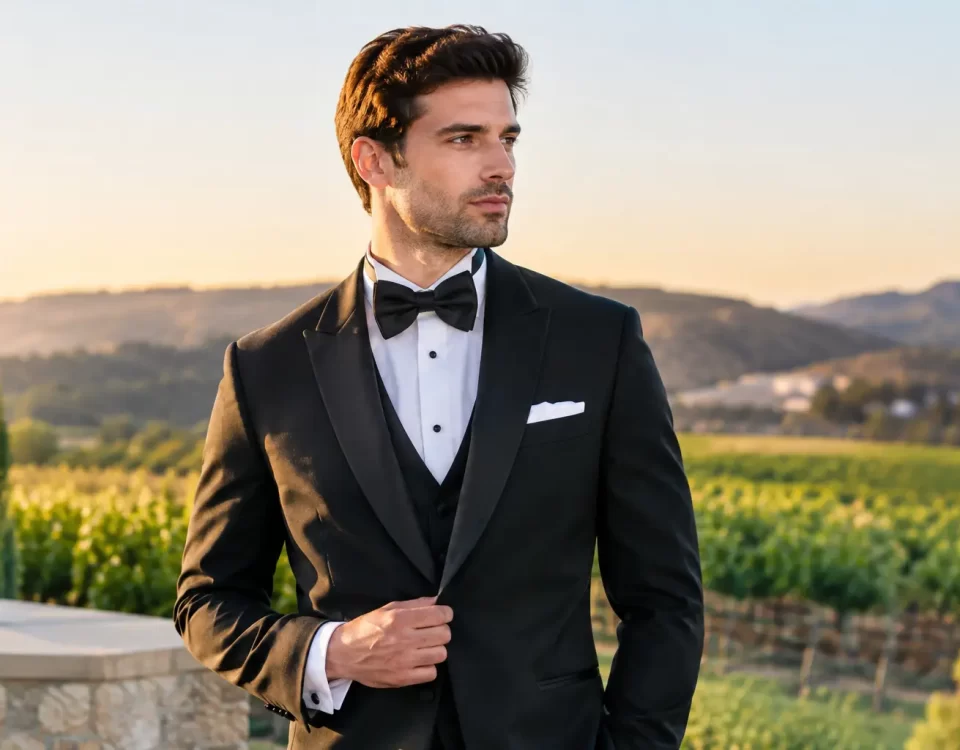
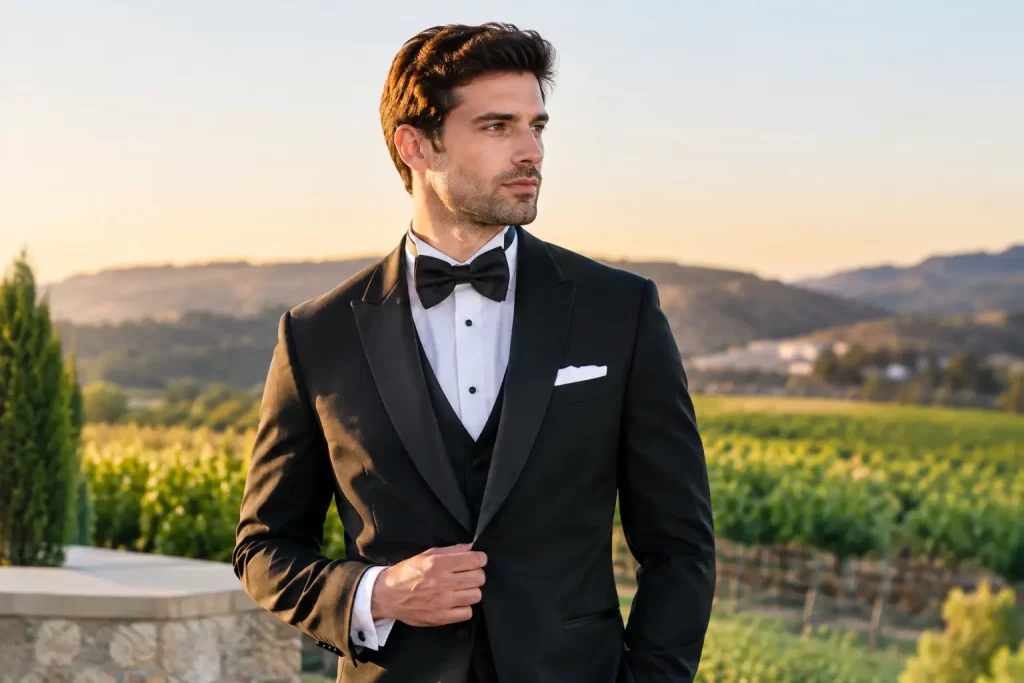
The invitation, ceremony time, venue, and season should shape the direction of your attire. A black-tie evening wedding calls for a tuxedo, usually in black or midnight blue, with a formal shirt, bow tie, and polished black shoes. A formal ballroom wedding may also suit a tuxedo, while a classic dark suit is often the better choice for a refined but less formal celebration.
For winery weddings in Temecula, garden ceremonies, and outdoor Southern California receptions, a suit can look polished without feeling overdressed. Navy, charcoal, medium blue, and lighter neutral tones all have a place, depending on the time of day and the wedding palette. A lighter suit can work beautifully for a warm afternoon ceremony, but it may look out of place at a formal evening reception.
The goal is not to match every wedding detail exactly. Your attire should support the overall look while still letting you look like yourself. If your partner has a strong vision for the wedding colors, use it as a guide for your tie, pocket square, boutonniere, or lining details rather than forcing every piece of your outfit into one color.
Choose Between a Suit, Tuxedo, Rental, or Purchase
A tuxedo is defined by its formal details, including satin or grosgrain facing on the lapels and often a stripe down the trouser seam. It is the right choice for black-tie weddings and can give a formal evening celebration a clean, elevated look. A suit is more versatile and usually easier to wear again for business, future weddings, graduations, dinners, and special events.
Whether to rent or buy depends on the event and your plans after the wedding. Renting makes sense when you need a tuxedo for one evening and do not expect to wear it again soon. Buying can provide better long-term value when you want a wedding suit that becomes part of your wardrobe. It also gives you more freedom with fit, fabric, and accessories.
A practical middle ground is to purchase the groom’s suit or tuxedo while offering rental options to groomsmen who may not need formalwear again. This can keep the group coordinated without requiring every member of the wedding party to make the same investment.
At Temecula Men’s Suit Outlet, grooms can compare suits, tuxedos, rentals, accessories, and in-house tailoring in one place. That is especially helpful when the groom wants a finished look while groomsmen have different budgets, sizes, or travel schedules.
The Complete Groom Attire Planning Guide to Fit
Fit matters more than the label inside the jacket. An affordable suit with careful alterations will usually look sharper than a more expensive garment that is too loose in the shoulders, too long in the sleeves, or too wide through the trousers.
Start with the jacket. The shoulder seam should end close to your natural shoulder, and the collar should sit smoothly against your shirt collar. When buttoned, the jacket should close without pulling into an X shape across the front. Sleeve length should generally reveal a small amount of shirt cuff, while the jacket length should create balanced proportions rather than cutting the body in half.
Trousers need equal attention. They should sit comfortably at your natural waist, remain clean through the seat and thigh, and break neatly over your shoes. Slim-fit suits can give a modern profile, but slim should not mean restrictive. You need to sit, walk, pose, and dance without pulling at the seams. Regular-fit and big-and-tall options can be tailored for a polished shape without sacrificing comfort.
Plan on at least one fitting after you select your outfit. If you are actively losing weight, gaining muscle, or making major changes to your grooming routine, mention that during your appointment. The closer you get to the wedding, the more conservative alterations should be. A final check one to two weeks before the ceremony gives you time to confirm the hem, sleeves, shirt fit, and accessories.
Build the Outfit From the Foundation Up
Once the suit or tuxedo is chosen, select the shirt and shoes before finalizing smaller accessories. A crisp white shirt is the safest option for most weddings because it works with nearly every suit color and photographs well. For a tuxedo, choose a formal shirt that complements the level of dress expected. For a suit, a clean white or light blue dress shirt often provides the most flexibility.
Shoes should match the formality and color of the outfit. Black leather shoes are the standard with black, charcoal, and tuxedo attire. Dark brown shoes can work with navy and medium-blue suits, particularly for daytime or less formal weddings. Make sure they are broken in before the big day. New shoes may look great in the store, but a long ceremony and reception will expose every uncomfortable spot.
Your belt should match your shoes when you are wearing one. With a tuxedo, skip the standard belt and use formal trouser adjustments, suspenders, or a waistband designed for the tuxedo. Socks should be dress socks, not athletic socks, and should be long enough that your skin does not show when you sit.
Coordinate, Do Not Copy, the Wedding Party
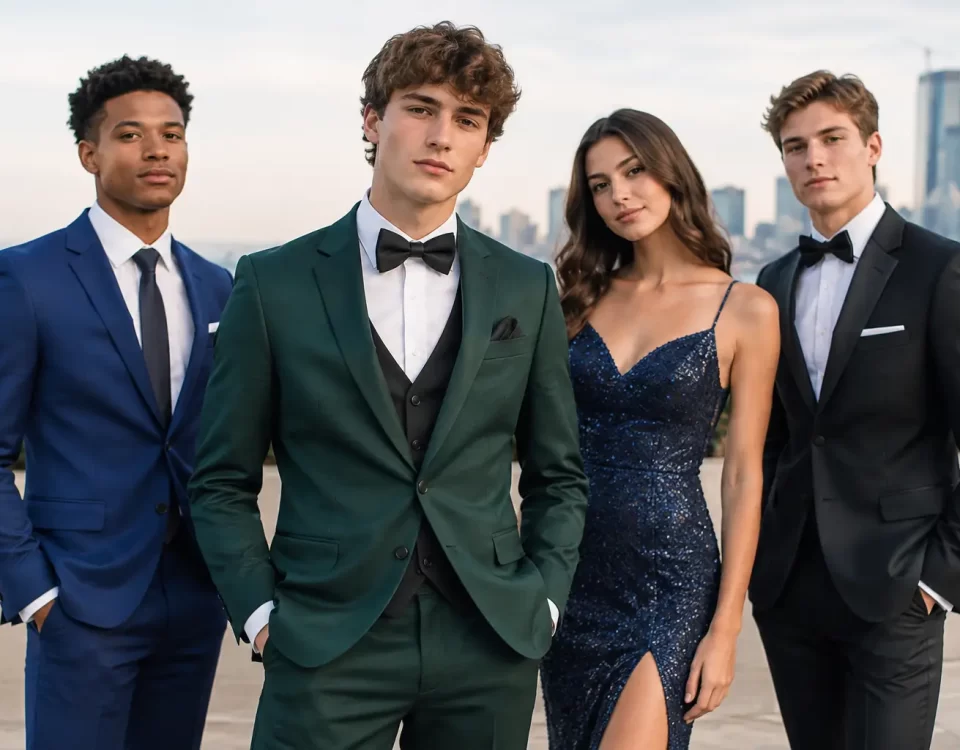
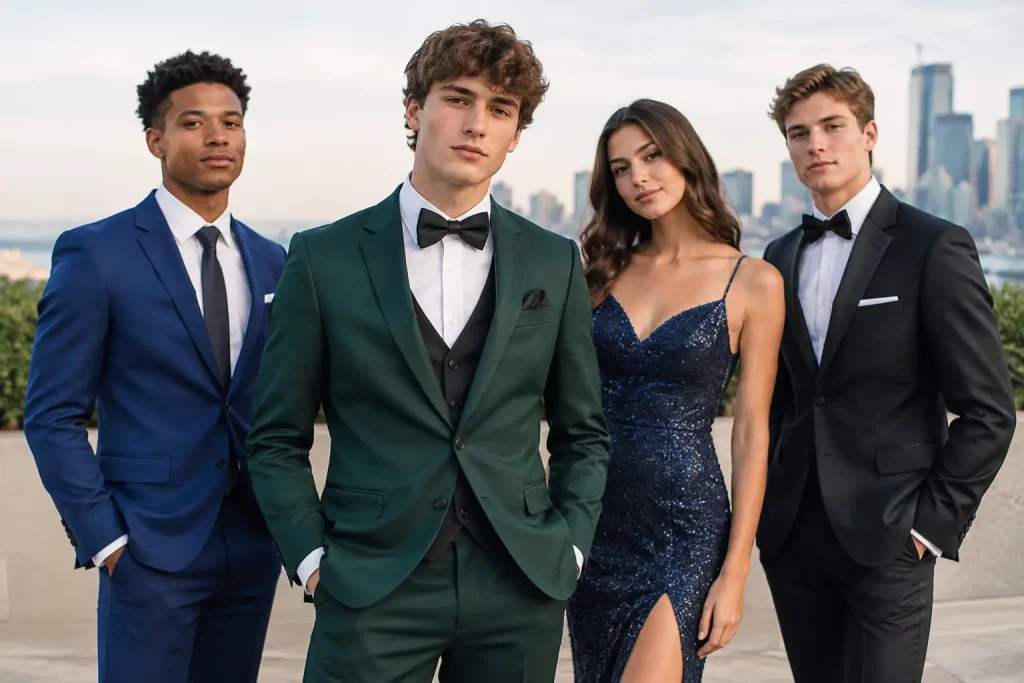
A coordinated wedding party looks intentional in photos. That does not mean every man must wear the exact same outfit. The groom can stand out subtly with a different tie, vest, boutonniere, lapel style, or suit shade while keeping the group visually connected.
For example, groomsmen in navy suits can wear matching ties, while the groom wears a coordinating tie in a richer texture or a slightly different pattern. If everyone wears black tuxedos, the groom can choose a distinctive boutonniere or a formal accessory that complements the partner’s attire. Keep the difference restrained. One or two intentional details look refined; too many competing details can make the group look unplanned.
Share clear instructions with groomsmen as soon as the direction is set. Include the required suit color, shirt color, shoe color, tie or bow tie selection, and the date they need to be fitted. This is particularly important when groomsmen live in different cities or have big-and-tall sizing needs. Waiting until the final month can limit available sizes and create unnecessary alteration pressure.
Follow a Timeline That Protects Your Options
Six to eight months before the wedding is a good time to settle on the level of formality, color direction, and whether you will buy or rent. If the wedding party is large, begin organizing their attire at this point as well.
Around three to five months out, select the groom’s suit or tuxedo and have groomsmen measured. This allows time for ordering, exchanges, and tailoring. It also gives everyone a clear deadline instead of a last-minute group text.
One to two months before the wedding, finalize ties, shoes, belts, pocket squares, and other accessories. Bring your actual wedding shoes and shirt to the fitting when possible. Hem length and sleeve appearance can change based on what you wear underneath.
During the final two weeks, try on the complete outfit from head to toe. Sit down, raise your arms, walk around, and make sure you can move naturally. Pack a spare shirt, extra socks, a lint roller, and a few safety pins for the wedding day. These are small preparations, but they prevent small problems from becoming distractions.
Avoid the Details That Date Poorly
Trend-driven choices can be fun, but your wedding photos should still feel good years from now. Choose a suit color that flatters you, a fit that allows movement, and accessories that support the wedding style rather than compete with it. If you are considering a bold patterned jacket, brightly colored shoes, or several statement accessories at once, try the complete look on before committing.
The best groom attire does not need to be complicated. It needs to fit correctly, match the occasion, and feel comfortable enough that you forget about it once the ceremony begins. Give yourself time, work with a knowledgeable fitter, and choose the version of formalwear that lets you be fully present when the doors open.